What are the maintenance costs of a pallet shrink wrapper? This question deserves more than a single annual estimate. Costs depend on wrapper design, film usage, operating hours, load conditions, and technician availability. A machine wrapping 300 pallets daily faces different wear than one serving a small warehouse.
Pat Lancaster, founder of Lantech and a pioneer in pallet-wrapping technology, said, “Reliable packaging equipment should make the operator’s work easier, not harder.” That principle remains practical in 2026. A well-maintained wrapper usually needs scheduled inspections, cleaning, lubrication, sensor checks, film-carriage adjustments, and occasional replacement parts. Common expenses include heating elements, cutting wires, belts, rollers, bearings, photo-eye sensors, and control components. Small parts can be inexpensive. Downtime is not.
A realistic maintenance budget may range from several hundred to several thousand dollars annually for a standard pallet shrink wrapper. High-volume systems can cost more, especially when service contracts or emergency callouts are included. Electricity, compressed air, spare film, and labor should also enter the calculation. They are often overlooked.
The most useful approach is practical. Record every service visit. Track replacement intervals. Photograph worn components before failure. Check film tension daily. Clean sealing areas before residue hardens.
Not every estimate will be perfect.
Some manufacturers publish limited cost data, while operating conditions vary widely. Therefore, this guide compares typical maintenance categories, hidden expenses, and preventive practices. It also questions one common assumption: the cheapest machine is not always the least expensive machine to maintain.
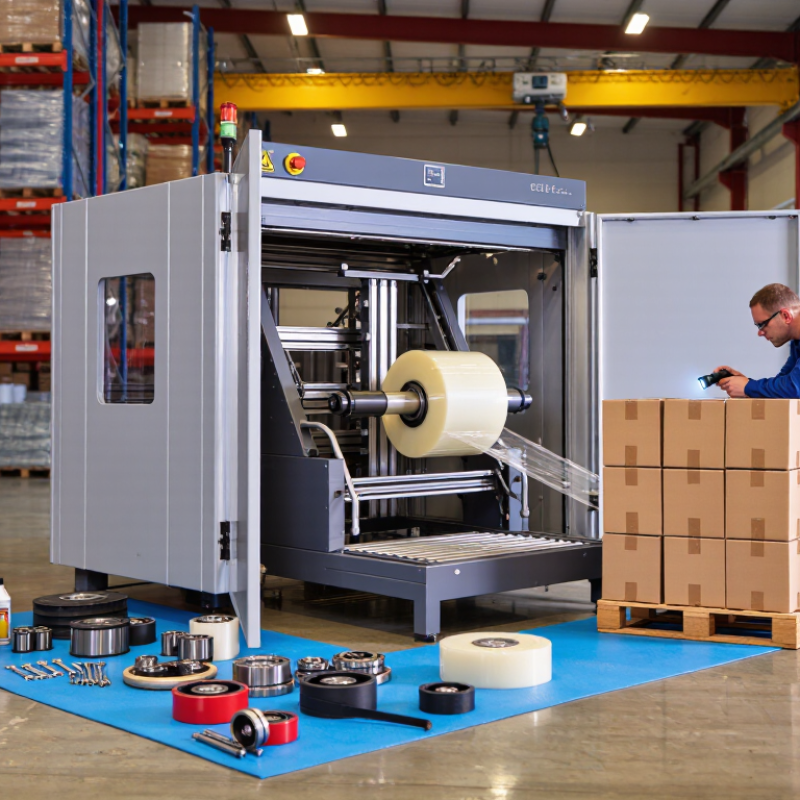
What Determines Pallet Shrink Wrapper Maintenance Costs in 2026?
In 2026, pallet shrink wrapper maintenance costs depend on more than replacement parts. A low-cost machine can become expensive when it runs continuously, wraps unstable loads, or works in a dusty warehouse. From maintenance records, the largest cost drivers are film carriage wear, sealing blades, drive belts, rollers, sensors, and technician time. Parts prices matter, but access time often matters more. A ten-minute adjustment may prevent a two-hour stoppage.
Operating conditions set the repair schedule. High humidity can affect electrical connections, while dust can block sensors and increase film tension errors. Daily cleaning, weekly inspection, and scheduled lubrication usually reduce emergency work.
However, over-lubrication creates its own problems. It attracts debris and can damage nearby components. Labor rates, local spare-part availability, operator training, and annual production volume also change the 2026 budget. A wrapper processing 80 pallets per hour needs a different maintenance plan from one handling 15.
Reliable forecasting starts with service history, not a generic percentage. Record failure dates, parts used, downtime minutes, and load conditions. Then separate planned maintenance from unexpected repairs. My estimates are never perfect; unusual loads and rushed adjustments can distort a yearly forecast. That weakness deserves attention. A practical budget includes routine labor, critical spare parts, safety checks, and a reserve for downtime.
Which Routine Maintenance Tasks Affect Operating Expenses?
Routine maintenance directly shapes pallet shrink wrapper operating expenses in 2026. Small neglect becomes expensive. Dust on photoelectric sensors can cause false stops, uneven film cutting, or repeated wrapping cycles. Each failed cycle consumes film, electricity, and operator time.
Inspect sensors, heating elements, rollers, chains, and film carriages during scheduled checks. Clean sensors with a soft, dry cloth, not aggressive chemicals. Confirm that rollers rotate freely and show no deep grooves. Lubricate moving parts according to the service manual. Too much lubricant can collect dust and create another problem. Keep it practical.
Film tension deserves close attention. Incorrect tension increases film use and can damage unstable loads. A technician should check tension settings against actual pallet weight and load shape. Loose chains may create vibration, while over-tightened components increase motor strain. These small adjustments often reduce unplanned downtime and emergency labor.
Record inspection dates, replaced parts, film waste, and stoppage causes. A simple log supports reliable cost decisions. In my experience, teams often replace a sensor before checking alignment. That mistake wastes money. Alignment checks take minutes, but they are easy to skip during busy shifts. Some maintenance estimates also ignore cleaning labor, which makes the budget look better than reality. Review those assumptions monthly, especially when production volume changes.
2026 Top Pallet Shrink Wrapper Maintenance Costs: Which Routine Tasks Affect Operating Expenses?
Estimated annual maintenance cost allocation for a standard pallet shrink wrapper operating in one shift. Film carriage and pre-stretch components typically account for the largest share because worn rollers, belts, and bearings can increase film consumption and cause unplanned downtime. Preventive inspections, cleaning, lubrication, and electrical checks help control operating expenses.
Cost figures are industry-based planning estimates in USD and vary by machine configuration, workload, labor rates, and replacement-part prices.
How Much Do Replacement Parts and Service Labor Cost?
2026 Top Pallet Shrink Wrapper Maintenance Costs?
How Much Do Replacement Parts and Service Labor Cost?
In 2026, routine pallet shrink wrapper service usually costs $90 to $180 per labor hour in the United States. A standard service visit may add $150 to $350 for travel and diagnostics. Technicians often need two to four hours for inspection, cleaning, adjustment, and testing. Regional rates vary. Emergency work costs more.
Replacement parts create wider differences. A cutting wire may cost $20 to $60, while a heater assembly can reach $150 to $500. Film carriage rollers commonly range from $80 to $250 each. Photoelectric sensors may cost $75 to $300. Drive motors, control modules, and specialized circuit boards can exceed $700. A complete repair may therefore range from $300 to over $2,000, excluding production losses.
Small details matter. A loose chain, dusty sensor, or worn sealing bar can increase film use before failure appears. Service records help technicians identify these patterns. Ask for labor hours, part numbers, testing charges, and warranty terms on every estimate. Safety checks should include electrical isolation, guard condition, and heat protection. Never bypass an interlock to reduce downtime.
Some estimates remain imperfect. A technician may discover hidden wear after opening the cabinet. Older machines can also require custom fabrication or longer parts searches. Monthly cleaning and quarterly inspections usually cost less than repeated emergency visits. However, preventive service does not eliminate every breakdown. That assumption deserves review.
2026 Top Pallet Shrink Wrapper Maintenance Costs? - How Much Do Replacement Parts and Service Labor Cost?
| Maintenance Item |
Recommended Frequency |
Typical Replacement Parts |
Parts Cost (USD) |
Service Labor Hours |
Labor Cost (USD) |
Estimated Task Total (USD) |
| Film carriage rollers and bearings |
Every 6–12 months |
Roller bearings, bushings, wear sleeves |
$90–$280 |
1.5–3.0 |
$180–$540 |
$270–$820 |
| Film tension and dancer assembly |
Every 12–24 months |
Dancer bearings, springs, tension sensor |
$180–$650 |
2.0–4.0 |
$240–$720 |
$420–$1,370 |
| Film cutting and heat-sealing system |
Inspect monthly; replace as needed |
Cutting blade, heater strip, non-stick tape, thermocouple |
$120–$420 |
1.0–2.5 |
$120–$450 |
$240–$870 |
| Turntable or rotary-drive system |
Every 12–24 months |
Drive belt, chain, sprocket, gearbox oil |
$140–$750 |
2.0–5.0 |
$240–$900 |
$380–$1,650 |
| Pre-stretch motor and film-drive components |
Every 12–24 months |
Pre-stretch rollers, timing belt, motor coupling |
$260–$1,100 |
2.5–6.0 |
$300–$1,080 |
$560–$2,180 |
| Photoelectric sensors and limit switches |
Test monthly; replace when faulty |
Pallet sensor, film sensor, proximity switch |
$80–$420 |
1.0–3.0 |
$120–$540 |
$200–$960 |
| Control panel, relays, and variable-frequency drive |
Inspect every 6–12 months |
Cooling fan, relay, contactor, drive unit |
$160–$1,600 |
2.0–6.0 |
$240–$1,080 |
$400–$2,680 |
| Pneumatic gripper and air-preparation system |
Drain and inspect weekly; rebuild annually |
Air filter, regulator, solenoid valve, cylinder seals |
$100–$620 |
1.5–4.0 |
$180–$720 |
$280–$1,340 |
| Annual preventive-maintenance inspection |
Once per year |
Lubricants, cleaning materials, minor fasteners |
$40–$180 |
3.0–6.0 |
$360–$1,080 |
$400–$1,260 |
| Typical annual maintenance budget for one pallet shrink wrapper |
$1,090–$5,?20 |
15–39 |
$1,980–$7,110 |
$3,070–$12,630 |
Cost basis: indicative 2026 U.S. service estimates for electrically powered pallet shrink wrappers. Service labor is estimated at $120–$180 per hour. Actual costs vary with machine configuration, access conditions, operating hours, freight, emergency call-out charges, taxes, and the extent of damage. The annual budget includes scheduled maintenance and commonly replaced wear parts but excludes major structural repairs and production downtime.
How Do Downtime and Equipment Age Increase Maintenance Costs?
Pallet shrink wrapper maintenance costs rise sharply when downtime interrupts a live packing line. A stopped turntable can leave wrapped loads waiting, operators idle, and outbound trucks delayed. The expense is not limited to a replacement sensor. It also includes lost labor, rushed freight, damaged film, and missed production targets.
The U.S. Department of Energy’s Operations and Maintenance Best Practices Guide reports that predictive maintenance can reduce costs by 8–12% compared with preventive maintenance. It also identifies potential downtime reductions of 35–45%. For a shrink wrapper, this means checking film tension, conveyor chains, heaters, bearings, and photoelectric sensors before failure. A noisy bearing at 7 a.m. is cheaper to address than a seized shaft during the evening shift. Small warning signs matter.
Equipment age adds another layer. Older wrappers often need more frequent alignment, lubrication, electrical testing, and replacement of heat-control components. An industry maintenance survey published in 2024 found that aging assets remain among the leading maintenance challenges for manufacturers. That result feels familiar on the floor. Older machines may still run well, but their parts become harder to source, and technical records may be incomplete. I have seen teams over-trust a long-running machine, then discover that one inexpensive inspection was skipped for months. The lesson is uncomfortable: maintenance budgets should reflect machine age and downtime exposure, not only purchase price.
How Can Businesses Reduce Pallet Shrink Wrapper Maintenance Costs?
Reducing pallet shrink wrapper maintenance costs in 2026 starts with disciplined daily observation. Operators should inspect film tension, turntable clearance, rollers, and emergency stops before each shift. A loose guide can create uneven wraps, extra film use, and avoidable motor strain. Record noise, vibration, film breaks, and fault codes in a simple maintenance log. Small changes often reveal expensive failures early. Keep it practical.
Clean sensors and film-contact surfaces with approved materials, following equipment manuals and site safety procedures. Dust on a photoelectric sensor may cause repeated cycles or unexpected stops. Lubricate only specified points and use the correct quantity; excess grease attracts grit. Check belts, chains, bearings, and electrical connections during scheduled weekly inspections. Replacing a worn bearing is usually cheaper than repairing a damaged shaft or gearbox. Stock parts according to failure history, not guesswork.
Train operators to adjust settings within documented limits, rather than compensating for unstable loads with excessive tension. Stable pallets, aligned loads, and consistent film reduce mechanical stress. A monthly review of downtime, repair hours, and consumable waste can expose hidden costs. Preventive schedules are not perfect. A machine may fail soon after inspection. Condition-based checks and technician review still matter. One overlooked detail matters. Photographing recurring defects can improve troubleshooting, supplier communication, and future training.
FAQS
Operating hours, load stability, warehouse conditions, and machine age affect total costs. Dust and unstable pallets increase wear. Technician access time can cost more than parts.
Common service items include film carriage rollers, sealing blades, drive belts, chains, sensors, and heating elements. Motors and control modules may cost much more. Small parts still matter.
Routine service commonly costs $90 to $180 per labor hour in the United States. Travel and diagnostics may add $150 to $350. Emergency visits usually cost more.
Cutting wires may cost $20 to $60. Rollers often cost $80 to $250 each. Sensors may cost $75 to $300. Control modules can exceed $700.
Clean photoelectric sensors with a soft, dry cloth. Check rollers for grooves. Inspect chains, heating elements, and film tension. These tasks can prevent repeated wrapping cycles.
Yes. Too much lubricant attracts dust and may damage nearby components. Follow the service manual. More lubricant is not always better.
Humidity can affect electrical connections. Dust may block sensors and increase film tension errors. A dry, clean area usually supports longer component life.
Record failure dates, parts used, downtime minutes, and load conditions. Separate planned work from emergency repairs. Add routine labor, critical parts, safety checks, and a downtime reserve.
Request labor hours, part numbers, testing charges, travel fees, and warranty terms. Include electrical isolation, guard condition, and heat protection checks. Hidden wear can change the final estimate.
Preventive service does not eliminate every breakdown. Unusual loads, rushed adjustments, and older components can distort forecasts. My estimates are never perfect. Monthly review helps.
Conclusion
In 2026, pallet shrink wrapper maintenance costs depend on machine design, workload, operating conditions, and service requirements. What are the maintenance costs of a pallet shrink wrapper? Typical expenses include scheduled inspections, film carriage adjustments, heater and sealing system checks, lubrication, electrical testing, replacement wear parts, and technician labor. High production volume, dust, temperature changes, and improper operation can increase the frequency and cost of maintenance.
Downtime is another major factor because unexpected failures may interrupt shipping schedules and require urgent repairs. Older equipment generally costs more to maintain as components wear out and compatible parts become harder to source. Businesses can reduce total expenses by following a preventive maintenance schedule, training operators, keeping essential spare parts available, monitoring performance changes, and addressing minor faults before they become major breakdowns. Comparing repair costs with equipment replacement can also help companies make practical long-term decisions.
 Jinye Machinery
