Jinye Machinery Jinye Machinery

China Top Stretch Hooder Why Is Film Not Releasing Properly?

Time:2026-10-13 Author:Ethan
0%

When a China top stretch hooder stops releasing film cleanly, production teams often blame the film first. That assumption can be wrong. The real issue may involve roll alignment, brake pressure, static electricity, or a poorly adjusted opening cycle. A narrow film edge can fold around the load. A noisy unwind may reveal uneven tension.

Packaging automation specialist Daniel Mercer explains, “Film release is rarely one fault; it is usually a small mismatch between tension, air, and timing.” His observation reflects a common service reality. Operators may increase machine speed, hoping to solve the delay. Sometimes, that makes the problem worse. The film can stretch too tightly against the grippers, especially when the roll core is damaged or humidity changes inside the plant.

So, Why is my stretch hooder failing to release the film properly? This question needs a measured inspection, not a quick parts replacement. Check whether the film roll sits squarely on the shaft. Inspect the dancer roller, pneumatic regulator, cutting unit, and release sensors. Look for adhesive residue near the sealing jaws. Even a small buildup can disturb film movement.

The diagnosis is not always perfect. A machine may pass a dry test and fail during continuous loading. That detail matters. Experienced technicians compare film batches, load dimensions, temperature, and air pressure before changing settings. Reliable maintenance records also expose repeating patterns. With careful testing, the stretch hooder can return to stable release performance, while unnecessary downtime and wasted film are reduced.
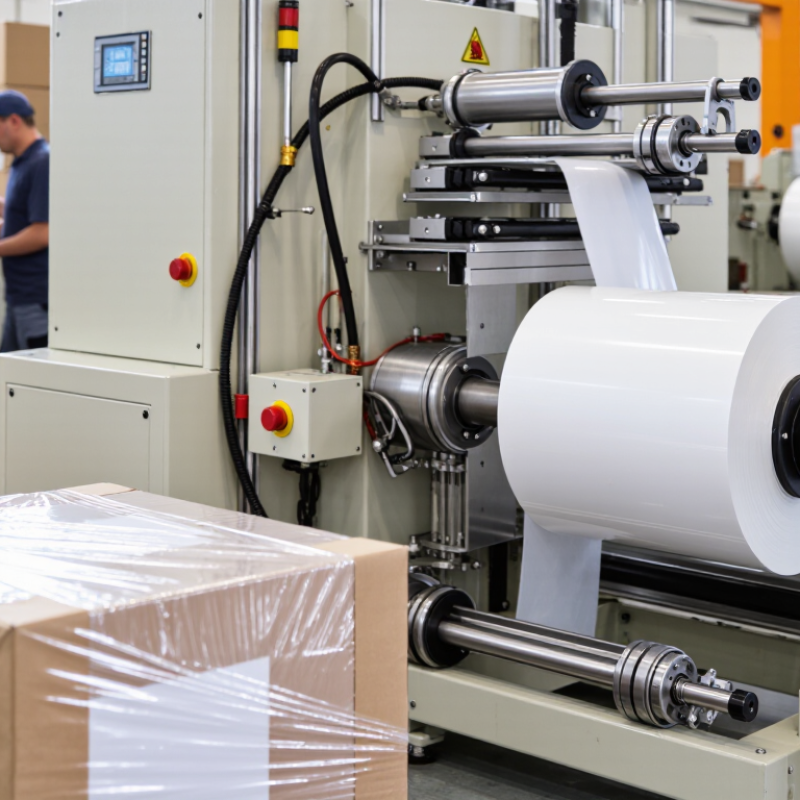
China Top Stretch Hooder Why Is Film Not Releasing Properly?

What Is a Stretch Hooder and How Does Film Release Work?

China Top Stretch Hooder Why Is Film Not Releasing Properly?

What Is a Stretch Hooder and How Does Film Release Work?

A stretch hooder places tubular film over palletized goods. It stretches the film vertically and laterally around the load. Unlike shrink wrapping, the film usually needs no heat. Film release depends on smooth unwinding, stable tension, and accurate gripping. If the film drags, folds, or stops halfway, the cause is often mechanical.

Operators should inspect the film roll, dancer system, rollers, and gripping jaws. A roll wound too tightly may resist unwinding. Dust on rollers can also increase friction. Incorrect film width, low temperature, or uneven pallet corners may create sudden tension. Check the film direction and confirm that the roll is centered. Small alignment errors matter. In my experience, changing tension immediately can hide the real problem. That shortcut often wastes film. The machine settings must match film thickness and elasticity, although this is sometimes overlooked.

Tips: Start with a slow test cycle and watch the first two meters of film. Keep rollers clean and inspect bearings for rough movement. Record film width, thickness, tension, and fault timing. If release improves after changing the roll, compare both rolls carefully. Do not blame the film too quickly. The loading pattern may be the real trigger. A qualified technician should verify sensors, guarding, and tension controls before regular production resumes.

Which Film Properties Affect Release Performance?

On a stretch hooder, poor film release often starts with the film itself, not the machine. The key property is coefficient of friction. High outer-surface friction can make folded film cling during opening. Excessive inner tack creates similar symptoms. The sleeve may hesitate, wrinkle, or open unevenly above the load. Operators often call this “sticking,” although the root cause may be poor surface balance.

Film thickness and stiffness also influence release performance. A thin film can lose shape after heating, especially under high stretch ratios. A very stiff film may resist opening at the gusset and snap back suddenly. Elastic recovery matters because the film must expand, travel downward, and settle without dragging. Additive migration can change tack over time. Storage temperature matters too. A roll kept near a hot wall may release differently from one stored in a cooler aisle.

During troubleshooting, I compare film lots, surface friction, tack, thickness, and elongation under actual machine settings. I also inspect roll tension and winding hardness. Film can pass a laboratory test but remain unstable during production. That gap deserves attention. A practical trial uses the same load, speed, stretch ratio, and ambient temperature. Measure release behavior, not only tensile strength. I have sometimes blamed air pressure too quickly. Film data later proved more important than expected.

How Do Machine Settings Cause Film Release Problems?

When a stretch hooder releases film poorly, machine settings are often the first place to inspect. Film tension that is too high can pull the roll unevenly. The film may wrinkle, tear, or remain trapped near the rollers. Too little tension creates loose loops and unstable feeding. Small changes matter.

The pre-stretch ratio also affects release performance. If the ratio exceeds the film’s elastic limit, the material can tighten around guide rollers. A low ratio may leave excessive slack before the hood reaches the load. Adjust the unwind brake gradually, then observe the film path for several cycles. Do not change multiple settings at once. That makes the cause difficult to identify.

Timing settings deserve close attention. If the opening jaws close too early, they can grip the film before enough material reaches them. If the carriage moves too quickly, the film may pull away from one side. Check the relationship between carriage speed, roller speed, and clamp delay. Clean rollers are essential, but cleanliness alone will not correct poor synchronization. In field adjustments, operators sometimes increase tension to hide tracking errors. That choice can worsen the release problem. A better check includes film width, roll alignment, sensor position, and actual tension readings. Even experienced technicians can overlook a slightly tilted roll.

China Top Stretch Hooder Why Is Film Not Releasing Properly? - How Do Machine Settings Cause Film Release Problems?

Machine Setting / Film Variable Typical Operating Reference Release Problem Observed Likely Technical Cause Recommended Adjustment or Check Priority
Film tension during unwinding Low, stable tension; commonly adjusted within 10–30 N Film hesitates, jerks, or remains attached to the roll during release. Excessive brake torque, incorrect dancer calibration, or tension fluctuations. Reduce unwind braking gradually, verify dancer movement, and confirm that the tension sensor reads zero when unloaded. High
Dancer roller response Smooth travel without reaching either limit Intermittent film release and uneven film feeding. Slow control response, sticking bearings, misalignment, or incorrect control gain. Clean and inspect the roller assembly, check alignment, and tune the control response so the dancer remains near its center position. Medium
Film roll alignment Roll centered; edge deviation typically below 3 mm Film edge rubs against the frame or telescopes on the roll. Roll mounted off-center, shaft not level, or side guides set too tightly. Re-center the roll, check shaft level, and leave sufficient clearance for free rotation without lateral movement. High
Film threading path Film follows every guide and roller in the specified direction Film sticks at a guide roller or releases with diagonal wrinkles. Incorrect threading, missed guide roller, or film surface contacting a rough edge. Stop the machine, follow the threading diagram, and inspect all contact surfaces for burrs, adhesive, or contamination. High
Guide roller cleanliness Clean, dry, and freely rotating Film starts releasing but stops at the next roller. Dust, adhesive residue, packaging fibers, or a seized bearing increases surface drag. Clean rollers with an approved non-abrasive method and replace damaged bearings or rough roller surfaces. Medium
Film width and layflat size Compatible with the machine recipe and load dimensions Film catches on forming parts or opens unevenly. Film width is unsuitable, roll is incorrectly specified, or the gusset is not positioned correctly. Verify film width, layflat, gusset position, and roll orientation against the product and machine requirements. High
Film thickness consistency Uniform thickness across the roll; check supplier specification Release force changes as the film travels across the roll. Thickness variation, edge bead, telescoping, or a damaged roll edge. Inspect the roll visually, compare thickness across the web, and quarantine rolls with severe deformation or edge damage. Medium
Film storage temperature Stable indoor conditions, commonly 15–30°C Film layers feel tightly bonded or release inconsistently. Excessive heat, direct sunlight, high humidity, or insufficient acclimatization after transport. Store rolls in a dry, shaded area and allow cold or hot material to reach room temperature before use. Medium
Pre-stretch or film-feed speed Start at the validated recipe; change in small increments Film pulls back, tears, or cannot pass smoothly through the opening system. Feed speed is too high for the film grade, or the speed ratio between rollers is incorrect. Reduce the speed or pre-stretch setting step by step and confirm that roller speeds remain synchronized. High
Film opening and spreading air Stable, moderate airflow without fluttering Tubular film does not open fully or collapses before loading. Air pressure is too low, nozzle direction is incorrect, or airflow is excessive and unstable. Clean air nozzles, check for leaks, aim airflow into the film opening, and adjust pressure gradually. Medium
Film-contact temperature Near ambient unless the process specifically requires heating Film becomes soft, tacky, or difficult to separate. Hot air, heated components, or nearby equipment raises the film temperature. Check heater settings and shielding, measure the film-contact area, and prevent unnecessary heat exposure before release. High
Machine acceleration and start-up ramp Controlled acceleration without sudden torque demand Film releases correctly at low speed but slips or tears during start-up. Acceleration is too aggressive, causing a sudden tension spike. Increase the acceleration time, confirm motor synchronization, and monitor tension during the first cycle. Medium
Film splice, folded edge, or damaged section No loose splice, severe crease, or torn edge in the active web Film suddenly stops, folds, or pulls irregularly at one point in the roll. A splice or damaged section catches on a guide or creates a local thickness increase. Stop safely, remove or mark the defective section, and inspect the remaining roll before restarting production. Medium
Recommended troubleshooting order: Check film threading, roll alignment, guide rollers, unwind tension, dancer response, and speed synchronization before changing multiple settings at the same time.
Adjustment rule: Change one parameter at a time in small steps and record the result at a constant machine speed and load condition.

What Mechanical Issues Prevent Smooth Film Release?

A stretch hooder may fail to release film smoothly because of mechanical resistance, not poor film quality. In field inspections, I often find misaligned film rollers, worn bearings, or excessive brake tension. The film then drags, folds, and releases unevenly around the load. A roller that feels slightly rough can create visible wrinkles within seconds. The fault is easy to miss.

Incorrect dancer-arm calibration is another common cause. If the arm reacts too slowly, film tension rises before the cutting and sealing cycle. If it reacts too quickly, the film may slacken and touch the frame. Operators should check roller parallelism, pneumatic pressure, brake settings, and cutter clearance during a controlled dry run. The 2024 State of Flexible Packaging Industry report recorded approximately 42.9 billion dollars in United States flexible-packaging sales, showing how much production depends on stable converting and packing equipment. Higher output makes small mechanical errors more expensive.

Film surface friction also matters. ASTM D1894 testing measures the static and kinetic coefficients of friction between film surfaces. A changed friction value can affect unwinding, especially when dust collects on rollers. I have seen technicians adjust tension first, while the real issue was contamination under a guide roller. That diagnosis was incomplete. Proper maintenance records should compare motor load, film tension, roller temperature, and release speed. Even a five-minute inspection can expose a bent shaft or a loose coupling before it causes repeated film breaks.

How Can Operators Diagnose and Fix Film Release Failures?

China Top Stretch Hooder: Why Is Film Not Releasing Properly?

When stretch hood film fails to release, operators should inspect the process before changing the roll. Check whether the film is centered, cold, damp, or telescoped. A loose edge often points to uneven roll tension. Static can also make the film cling to the carriage or guide rollers.

Measure film width and thickness at several points. Do not trust one sample. ASTM D1894 provides a practical method for comparing static and kinetic coefficient of friction.

Excessive friction may indicate incorrect film formulation, surface contamination, or storage damage. Smithers’ report, The Future of Stretch and Shrink Films to 2028, identifies downgauging and higher-performance films as major market directions. Thinner film leaves less tolerance for poor machine settings.

Operators should record pre-stretch, film temperature, carriage speed, air pressure, and release timing. Change one setting at a time. This prevents false conclusions.

If the film releases late, reduce pre-stretch slightly and inspect the brake system. If it snaps back, tension may be too high. Clean rollers with an approved lint-free method. Never scrape their surfaces.

PMMI’s 2024 packaging operations research continues to identify unplanned downtime and operator training as practical productivity challenges. A short trial log can reveal patterns that memory misses.

The uncomfortable truth is simple: the film is not always the problem. Yet blaming the machine too quickly is equally risky. Recheck storage conditions, especially heat and humidity, before approving a new film batch.

FAQS

Which film property most affects release performance?

Coefficient of friction is often critical. High outer-surface friction can make folded film cling during opening. Excessive inner tack may cause similar sticking. The surfaces need balance.

How can film thickness and stiffness affect opening?

Thin film may lose shape after heating and high stretching. Very stiff film can resist opening at the gusset. It may then snap back suddenly. Neither behavior is ideal.

Why does elastic recovery matter during release?

The film must expand, move downward, and settle smoothly. Poor recovery can create dragging, wrinkles, or uneven opening above the load. Watch the sleeve closely.

Can storage conditions change film release behavior?

Yes. Additive migration can change tack over time. A roll stored beside a hot wall may release differently from one kept in a cooler aisle. Storage history matters.

Which machine settings commonly cause release problems?

Excessive tension can pull the roll unevenly. Low tension can create loose loops and unstable feeding. Adjust the unwind brake gradually. Small changes matter.

How does the pre-stretch ratio influence film release?

A ratio beyond the film’s elastic limit can tighten film around guide rollers. A low ratio may leave slack before the hood reaches the load. Use actual production settings.

Why can timing and synchronization affect film opening?

Jaws closing too early may grip the film before enough material arrives. A fast carriage can pull one side away. Check carriage speed, roller speed, and clamp delay together.

What should operators inspect before blaming air pressure?

Compare film lots, friction, tack, thickness, and elongation. Inspect roll tension, winding hardness, alignment, sensors, and roller cleanliness. I have blamed air pressure too quickly. Film data sometimes explains more.

Why can a laboratory film test disagree with production results?

Laboratory testing may not reproduce the real load, speed, stretch ratio, or room temperature. Measure release behavior during production trials. Tensile strength alone is not enough.

What is a practical troubleshooting method?

Use the same load and machine conditions for each trial. Change one setting at a time. Observe several cycles. I may still miss a slightly tilted roll. Recheck the basics.

Conclusion

A stretch hooder automatically stretches a tubular film sleeve and places it over a palletized load, using controlled tension, airflow, and synchronized movement to create secure packaging. When asking, “Why is my stretch hooder failing to release the film properly,” operators should first examine the film itself. Excessive thickness variation, unsuitable elasticity, poor slip properties, static buildup, or incorrect roll dimensions can cause sticking, tearing, or uneven release. Film storage conditions may also affect performance.

Machine settings and mechanical conditions are equally important. Incorrect film tension, opening width, heating or air pressure, conveyor speed, and cycle timing can prevent smooth release. Worn rollers, misaligned guides, damaged clamps, blocked air passages, or contamination on contact surfaces may create additional resistance. A practical diagnosis should begin by checking the film specification and roll installation, then adjusting tension and timing step by step. Operators should inspect alignment, clean moving parts, and test the machine at a slower speed before returning to normal production.

Ethan

Ethan

Ethan is a seasoned marketing professional with a deep expertise in our company's innovative product line. With a passion for sharing knowledge and insights, he takes the lead in regularly updating our corporate blog, where he explores industry trends, product features, and effective marketing......