Jinye Machinery Jinye Machinery

Why Does Film Snap in High Speed Shrink Wrappers?

Time:2026-09-13 Author:Charlotte
0%

Film snapping can turn a smooth packaging run into sudden noise, loose bundles, and wasted material. The break often appears near the sealing jaw, film roller, or product corner. Operators may notice a sharp crack before the machine stops. What causes film snapping in high-speed shrink wrappers is rarely one isolated fault. Tension, temperature, film quality, machine speed, and package shape usually interact.

In practical production, excessive unwinding tension is a common starting point. A tight film roll may pull unevenly as its diameter changes. Worn rollers can add friction and create small scratches. Those marks may become visible only when the film stretches around a sharp carton edge. Heat also matters. If the film becomes too soft, it can elongate excessively. If it remains too cold, it may resist sealing and tear under tension. Incorrect perforations, inconsistent film thickness, and poor roll storage can produce similar symptoms. The film may look normal.

A reliable inspection should follow the film path, not only the break location. Check roller alignment, brake settings, sealing temperatures, and actual line speed. Compare a fresh roll with the problem roll. Record when snapping occurs. This helps separate equipment faults from material variation. That explanation is incomplete. Humidity, static, and changing product dimensions can also influence performance. Experienced technicians avoid adjusting every setting at once. Small, documented changes reveal more. Even then, results may differ between film grades and machines. Careful observation remains essential for stable, high-speed shrink wrapping.
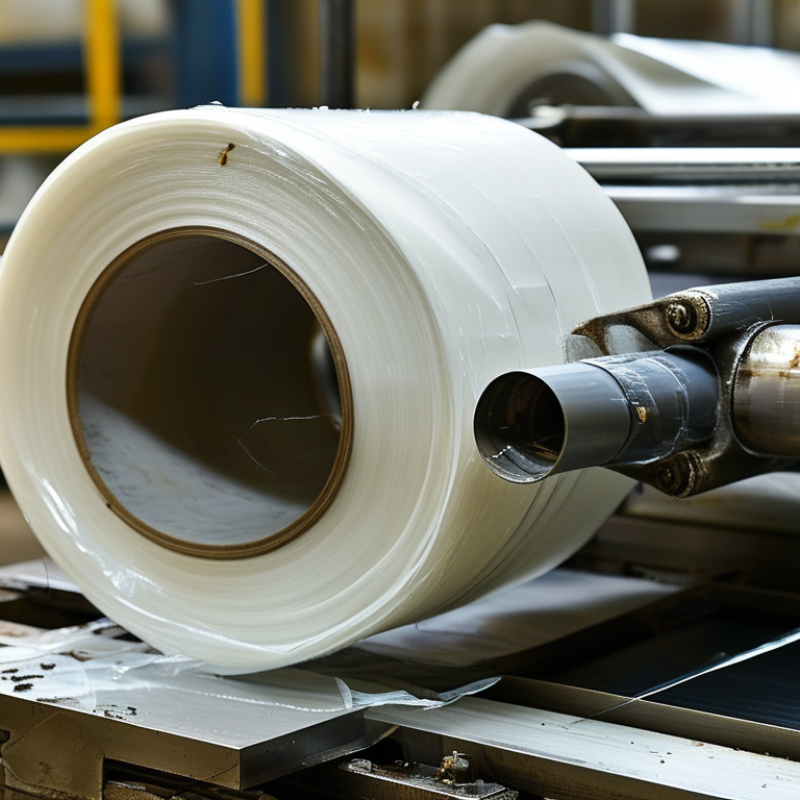
Why Does Film Snap in High Speed Shrink Wrappers?

What Film Snap Means in High-Speed Shrink Wrapping

Film snap in high-speed shrink wrapping is more than an annoying break. It is a warning from the film web. The material may be stretched beyond its working range, weakened by heat, or damaged before entering the sealing area. A sharp crack often appears near the film edge, seal point, or a rough roller surface. The location matters. It tells operators where to inspect first.

In production troubleshooting, I have seen tension blamed too quickly. That assumption can be wrong. A roll with uneven edges may create sudden resistance as it unwinds. Excessive brake pressure can then turn normal movement into a film snap. Check the unwind path, roller alignment, and dancer response. Inspect the film for tiny cuts, wrinkles, and thickness changes. Even a small nick can grow when the wrapper accelerates.

Temperature also changes the meaning of a snap. Film that is too cold may resist stretching and tear under tension. Film exposed to excessive heat may become soft, unstable, or prematurely shrink. Adjust one setting at a time, then observe several cycles. Record speed, tension, sealing temperature, and break location. This prevents guesswork. Not every snap comes from the machine. Film storage conditions, sharp package corners, and inconsistent loading can contribute too. A careful operator should question the first explanation, especially when the problem appears only during speed increases.

How Film Tension Builds During the Wrapping Cycle

Film rarely snaps because of one bad component. In high-speed shrink wrappers, tension builds throughout the wrapping cycle. The unwind brake resists the roll, while acceleration pulls film through the dancer, forming collar, and sealing area. Each speed change adds another tension peak.

A practical example shows the risk. A 500-millimeter film web, 15 microns thick, has only 7.5 square millimeters of cross-sectional area. A 40-newton pull creates about 5.3 MPa of stress before heating begins.

Small edge damage can then become a full-width tear. The problem becomes worse when the roll has uneven winding, cold storage, or excessive brake pressure.

Smithers’ 2024 flexible-packaging outlook estimates the global market will grow from about 270 billion dollars in 2023 to more than 300 billion dollars by 2028. That growth encourages downgauging, but thinner film leaves less tolerance for tension spikes. ASTM D882 testing also shows why tensile strength alone is not enough; elongation and consistency matter during repeated acceleration. Operators should check dancer movement, brake response, nip alignment, and actual film stretch. Watch the film near the seal jaw. It should move smoothly, not twitch. A useful, imperfect rule is simple: reduce tension before increasing heat. Many teams adjust temperature first, although the real fault may begin several meters upstream.

Common Mechanical Causes of Film Breakage

Why Does Film Snap in High Speed Shrink Wrappers?

Common Mechanical Causes of Film Breakage

Film breakage in a high-speed shrink wrapper often begins with a small mechanical fault. The film may run smoothly for minutes, then snap near the forming shoulder or sealing area. In production, I have found that blaming film quality too quickly can hide the real cause. Misaligned rollers, worn bearings, and uneven nip pressure create concentrated stress. A tiny burr on a guide surface can cut the film like a knife. It may look harmless during a visual inspection.

Film tension is another common problem. Excessive brake force stretches the film before it reaches the product. A sudden acceleration can then tear the weakened section. Loose or damaged rollers may also pull the web sideways. This creates wrinkles, edge tension, and unstable tracking. Sealing jaws deserve attention too. If a jaw closes slightly off-center, it can catch the film edge. Excess heat may soften the film and make it stick before snapping. Settings are rarely perfect.

Tips: Check roller alignment with a straightedge and inspect surfaces by touch. Replace damaged bearings promptly. Clean adhesive dust from guide rollers. Watch the film path during operation, not only after stopping. Reduce tension gradually, then test at normal speed. Record the exact break location each time. Patterns often reveal the faulty component. A careful operator should also question their first diagnosis.

How Film Properties Affect High-Speed Performance

Film snapping in high-speed shrink wrappers often begins with a film property, not the machine itself. At higher speeds, the film has less time to absorb sudden tension changes. A thin section can stretch beyond its safe limit. It fails fast.

The balance between tensile strength and elongation is critical. A strong film may still snap if it stretches unevenly. Excessive elongation can create a weak, narrow area around sharp package edges. Low puncture resistance makes this problem worse. Friction matters too. If the film drags against guides, tension rises abruptly. If it slides too freely, control becomes unstable. Uneven thickness across the roll can also cause intermittent breaks. This issue is easy to miss during a short inspection.

Experienced technicians should measure tension at operating speed, not only during setup. Film samples should be checked for thickness variation, tensile strength, elongation, and puncture resistance. Coefficient of friction is worth reviewing when tracking feels inconsistent. Storage conditions also matter. Heat and humidity can change film stiffness before production begins. Seal temperature can add stress when the film is already stretched. A small adjustment may help, but it can hide a deeper material mismatch.

I once blamed machine tension for repeated breaks, then found a damaged roll edge. That finding changed the inspection routine, though the routine is still not perfect.

Methods for Diagnosing and Preventing Film Snap

Film snap in high-speed shrink wrappers usually begins with a small weakness. A nick on the roll edge, uneven film thickness, or excessive unwind tension can become a sudden tear. Check the broken ends closely. A clean, straight break often suggests tension or film fatigue. A jagged break may point to a roller burr, misaligned guide, or damaged film edge.

Run the wrapper at reduced speed and observe the film path. Measure tension before and after each guide roller, if suitable equipment is available. Inspect rollers for sharp edges, adhesive residue, and restricted movement. Confirm that the film roll sits squarely on its shaft. A telescoping roll can pull sideways and create unstable tension. Temperature matters too. Cold film may resist stretching, while excessive heat can weaken it before sealing.

Prevention requires controlled adjustments rather than one dramatic change. Lower unwind tension in small steps, then test several cycles. Clean rollers regularly and replace damaged guides. Store film in a dry area, away from direct heat, and allow it to reach operating temperature before use. Match film thickness and shrink characteristics to the wrapper’s speed and product shape. The first adjustment is not always the right one. Operators should record speed, tension, temperature, roll position, and break location after every trial. That record can reveal patterns that memory misses.

Why Does Film Snap in High Speed Shrink Wrappers? - Methods for Diagnosing and Preventing Film Snap
Diagnostic Area Typical Observation Measurable Check Likely Mechanism Corrective Action Priority
Film Tension Break occurs shortly after acceleration, during web unwinding or film infeed. Compare running tension with the film supplier's recommended range; check for sudden tension spikes rather than only average tension. Excessive or unstable tension reduces the film's remaining elongation capacity and concentrates stress at weak points. Reduce unwind or dancer tension gradually, tune acceleration and deceleration ramps, and verify that the tension-control system responds smoothly. High
Acceleration Profile Film snaps when the wrapper starts, stops, or changes speed rapidly. Review the machine speed trend and identify abrupt changes in line speed, especially at start-up and product-gap transitions. A rapid change in web velocity creates an inertial load that can exceed the film's tensile capacity. Use a longer ramp time, reduce sudden speed commands, and synchronize the unwind, infeed, sealing, and discharge sections. High
Film Thickness Random breaks increase after changing to a lighter-gauge film. Measure thickness across the roll width and compare actual values with the stated nominal thickness and tolerance. Thinner sections carry less load and may fail first when the web is tensioned at high speed. Quarantine rolls outside the agreed thickness tolerance, adjust tension for the actual gauge, and confirm the film is suitable for the line speed. High
Film Width and Edge Break starts at one edge and develops into a diagonal tear. Inspect edge trim, width consistency, nicks, folds, and longitudinal scratches under good lighting. Edge damage acts as a stress concentrator, allowing a small defect to propagate across the web. Replace damaged rolls, keep edge guides correctly aligned, remove sharp contact points, and prevent film from rubbing against machine frames. High
Roll Condition Breaks occur more often near the outside layers or after a roll has been stored for a long period. Check for telescoping, crushed edges, loose winding, blocking, moisture exposure, and core damage. Deformed rolls unwind unevenly and can generate localized tension peaks or surface defects. Store rolls upright or as specified by the film supplier, protect them from moisture and heat, and reject rolls with severe deformation. Medium
Film Temperature Film becomes brittle in a cold area or weak and overly soft near a hot machine section. Record ambient temperature and film temperature at the unwind, forming, sealing, and discharge zones. Temperature changes affect polymer flexibility, elongation, friction, and seal-related stress. Allow film to acclimate before use, control drafts and radiant heat, and keep heating equipment within the validated process window. Medium
Film Formulation Break frequency changes after switching film structures even when machine settings remain unchanged. Compare film structure, resin type, additives, seal layer, coefficient of friction, and stated tensile or elongation properties. Different film structures respond differently to tension, heat, friction, puncture, and high-speed handling. Run a controlled trial with matched gauge and width, then establish settings for each approved film structure. High
Roller Alignment Film tracks toward one side, wrinkles, or rubs a guide before snapping. Verify roller parallelism, shaft seating, guide position, and web centering while the machine is running slowly. Misalignment creates lateral force, wrinkles, and uneven tension across the web width. Align rollers and guides, confirm the film path is centered, and remove contamination from roller surfaces. High
Roller Surface and Bearings Film jerks, chatters, or shows repeated marks before the break. Check roller runout, bearing condition, surface damage, buildup, and free rotation. Sticking or eccentric rollers create intermittent tension pulses and localized abrasion. Clean or replace damaged rollers, service bearings, and confirm that all idler rollers rotate freely. High
Friction and Static Film clings to guides, attracts dust, or releases suddenly from a roller. Inspect contact surfaces and monitor static behavior; compare web tracking before and after cleaning or grounding. High friction or electrostatic attraction causes stick-slip motion and transient tension increases. Clean contact surfaces, verify grounding, use suitable anti-static controls, and confirm that guide materials are compatible with the film. Medium
Sealing and Cutting Zone Film tears near the longitudinal seal, cross-seal, knife, or hot-wire area. Inspect seal temperature, dwell time, pressure, knife condition, alignment, and contact with the film path. Excess heat, sharp edges, poor alignment, or premature gripping can weaken or notch the film. Reduce excessive heat or pressure, replace damaged cutting elements, correct alignment, and verify that the film is not trapped before sealing. High
Product Contact Film breaks only with certain product shapes, loads, or package heights. Record product dimensions, corners, protrusions, weight, spacing, and the exact break location. Sharp or unstable products puncture the web or create localized stretching during wrapping. Remove or shield sharp projections, improve product spacing, adjust film width, and confirm that the package profile is compatible with the film. High
Machine Speed Film runs reliably at moderate speed but snaps above a repeatable speed threshold. Conduct a controlled speed test and record breaks per 1,000 packages at each speed level. The combined effects of tension, inertia, friction, and heat exceed the process margin at higher throughput. Operate within the validated speed envelope, optimize tension and ramp settings, and increase speed only after stable trial results. High
Splice Quality Breaks occur at regular intervals that correspond to roll changes or visible splices. Inspect splice tape, overlap, thickness, adhesion, and splice position relative to guides and sealing components. A thick, stiff, loose, or poorly aligned splice can catch on equipment or create a local weak section. Use approved splice construction, keep splices smooth and centered, and mark splice locations for traceability. Medium
Root-Cause Verification Several possible causes are present and adjustments produce inconsistent results. Change one variable at a time and log film lot, roll number, speed, tension, temperature, product type, and break location. Multiple simultaneous changes obscure the relationship between process conditions and film failure. Use a structured trial plan, photograph the fracture and web path, preserve failed samples, and compare successful and failed runs. High
Recommended practice: establish a baseline using a known-good roll, record the exact break location, and adjust only one machine or material variable at a time. Tension, temperature, speed, and film limits should be confirmed against the equipment manual and the film supplier's technical data.

FAQS

What does a film snap usually indicate in high-speed shrink wrapping?

It signals stress, heat damage, or a weakness in the film web. The break location offers an important clue.

Where should operators inspect after a film break?

Check the film edge, sealing area, guide rollers, forming shoulder, and rough surfaces. Inspect upstream too.

Can excessive tension cause film snapping?

Yes. High brake pressure and sudden acceleration can stretch weakened film beyond its working range. Reduce tension gradually.

How can uneven film rolls create problems?

Uneven edges may create sudden unwinding resistance. The brake then adds stress, especially during speed increases.

What mechanical faults commonly damage film?

Misaligned rollers, worn bearings, uneven nip pressure, and small surface burrs can concentrate stress. Tiny defects matter.

How does temperature affect film breakage?

Cold film may resist stretching and tear. Excessive heat can soften film, cause sticking, or trigger early shrinkage.

What should operators watch during the wrapping cycle?

Observe dancer movement, brake response, film tracking, and the area near the sealing jaw. Smooth movement is expected.

Why can thinner film snap more easily?

Thinner film has less tolerance for tension peaks. A small edge nick can develop into a full-width tear.

Should operators increase heat when film keeps snapping?

Not automatically. Reduce tension first, adjust one setting, and observe several cycles. The first explanation may be wrong.

What records help identify repeated film breaks?

Record machine speed, tension, sealing temperature, and exact break location. Patterns may reveal a damaged roller or unstable setting.

Conclusion

Film snap in high-speed shrink wrappers occurs when the film cannot withstand the tension, acceleration, or friction created during the wrapping cycle. As the machine pulls, stretches, and seals the film, tension can build unevenly, especially during sudden starts, stops, changes in roll diameter, or misaligned film paths. A snap may indicate excessive tension, poor tracking, worn rollers, incorrect brake settings, sharp edges, or irregular movement in the sealing and conveying systems. Understanding what causes film snapping in high-speed shrink wrappers requires examining both the machine and the film itself.

Film properties also strongly influence performance. Excessive brittleness, inconsistent thickness, inadequate puncture resistance, unsuitable shrink characteristics, or improper storage can make film more likely to break under stress. Effective prevention includes checking alignment, cleaning and inspecting rollers, calibrating tension controls, maintaining sealing components, and matching film specifications to operating speed. Operators should also monitor breakage patterns, environmental conditions, and roll quality to identify the root cause and establish stable production settings.

Charlotte

Charlotte

Charlotte is a seasoned marketing professional with a deep understanding of the company's portfolio and a passion for elevating its presence in the market. With a keen eye for detail and a commitment to excellence, she ensures that our professional blog is regularly updated with insightful articles......